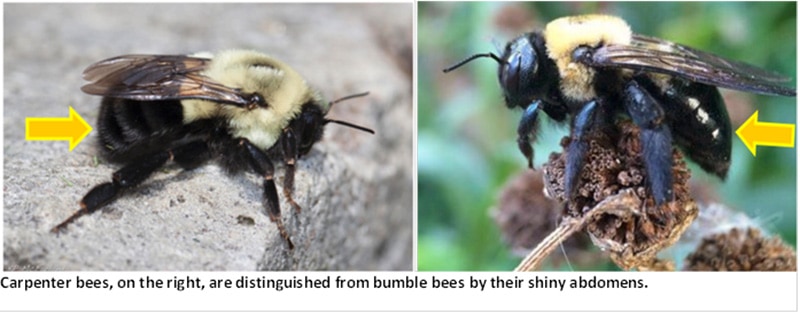
Carpenter bees have short tongues that are perfect for open faced flowers. Carpenter bees have a bare shiny black abdomen.
 Protect Your Home From Carpenter Bees While Protecting Pollinators
Carpenter bees on the other hand are solitary bees.

The difference between a bumble bee and a carpenter bee. You can see carpenter bees darting and diving around as well as chasing each other. Bumblebees have hairy abdomens. The fur on their thorax is not as thick as a bumblebee s fur.
The easiest way to differentiate them is to look at the bee s abdomen. The main difference between bumble bee and carpenter bee is that the bumble bee has a hairy abdomen with some yellow markings whereas the carpenter bee has a bare shiny black abdomen. The difference from the bumblebee is that the fur of the carpenter bee only covers their thorax.
It s quite uniform in color only ranging in a few shades from orange yellow through brown. Main differences between bumble bee and carpenter bee a bumblebee has a hairy abdomen that may sometimes have yellow markings while a carpenter bee has a bare shiny abdomen. The carpenter bee has no hair on the abdomen it is shinny and reflects the sun when flying.
Bumble bees have a hairy abdomen that may have some yellow markings. When it comes to behavior bumblebees are social insects. You get the idea.
Furthermore bumble bees are social and they build nests together while carpenter bees are primarily solitary. This is why the bumble bee and honey bee are named differently. The easiest way to differentiate between carpenter bees and bumblebees is from their abdomens.
They love the company of each other and live in colonies of 50 100 bees. The bumblebee is known more for its loud low buzz while the honeybee is known for the nectar syrup we like to drizzle on our favorite pastries. Mason bees build their houses from the dirt.
Bumblebees live in burrows or under compost heaps while the carpenter bees live in woods where they create a hole. A carpenter bee s abdomen is mostly bald and will look smooth and shiny. Leafcutter bees cut leaves.
Carpenter bees drill holes in wood. Carpenter bees have a bare and shiny black abdomen whereas bumblebees have a hairy abdomen that will usually have some type of yellow marking on them. The habitat difference between carpenter bee and bumblebee is that the former drills carves out a perfect 5 inch hole and each family will carve their own nest a hole in the wood plank for doorway or in a deck they usually enjoy old natural unpainted wood.
Bumblebees have long tongues so they are able to collect nectar from funnel shaped flowers. Their abdomen is relatively smooth and generally black or bluish in color. Along with their difference in appearance carpenter bees have a very distinct flying pattern.
The ant colonies have only one queen and sometimes two queens. One way to tell the difference between ants and termites is to take a close loom at their antennae.
 Identifying Ants Vs Termites Youtube
The termites have wide bodies and short legs when compared to ants that have small bodies and long legs.

Difference between ants and termites. Termites are rarely noticed unless their nest is disturbed. Termites are more organized and more skilful animals than the ants. Swarming termites are more likely to search for a new area to nest during the daytime.
Termites jeridu getty images. Ants on the other hand are normally brown black red or some combination of colors and they possess triple segmented bodies and less pronounced jaws. Hence they are referred as eusocial insects whereas the ants are not.
Most ants are black or brown while termites are pale and almost translucent. Unlike termites that have two pairs of equal wings ants have two pairs of wings but the front wings are larger than back wings. Both ants and termites can be divided up into several castes which depend upon their roles in the colony.
One difference between carpenter ants and termites is the time of day swarmers are active. Termites build nests towering towards the sky whereas the ants build nests either under the ground or in the leaves. While termites have straight antennae and thick waist area ants have elbowed antennae and thin waist area.
The easiest way to tell the difference between an ant and a termite is by their colouring. Once the sun goes down carpenter ants swarmers are more likely to emerge. Termites have straight antennas and abdomens while ants have kinked antennae and bodies which appear segmented.
It s the small things that count. Ants vs termites both ants and termites are a social animal groups of the class. Termite workers by comparison are transparent light or creamy white in color and they avoid light.
An ant s antennae will look elbowed on the ends folding or bowing inwards and it will appear to be topped with a minute ball. The termite will have antennae that look like they are made up of strung together beads and they will not be bent. Soldier termites typically have light colored abdomens and dark colored heads with strong jaws and long v shaped antenna.
Ant workers are reddish or dark colored and are frequently seen in the open foraging for food. Waist called a pedicel found between thorax and abdomen ants.
One easy difference to notice between these insects is their shape. Antennae are bent like an elbow in flying ants but not in termites.
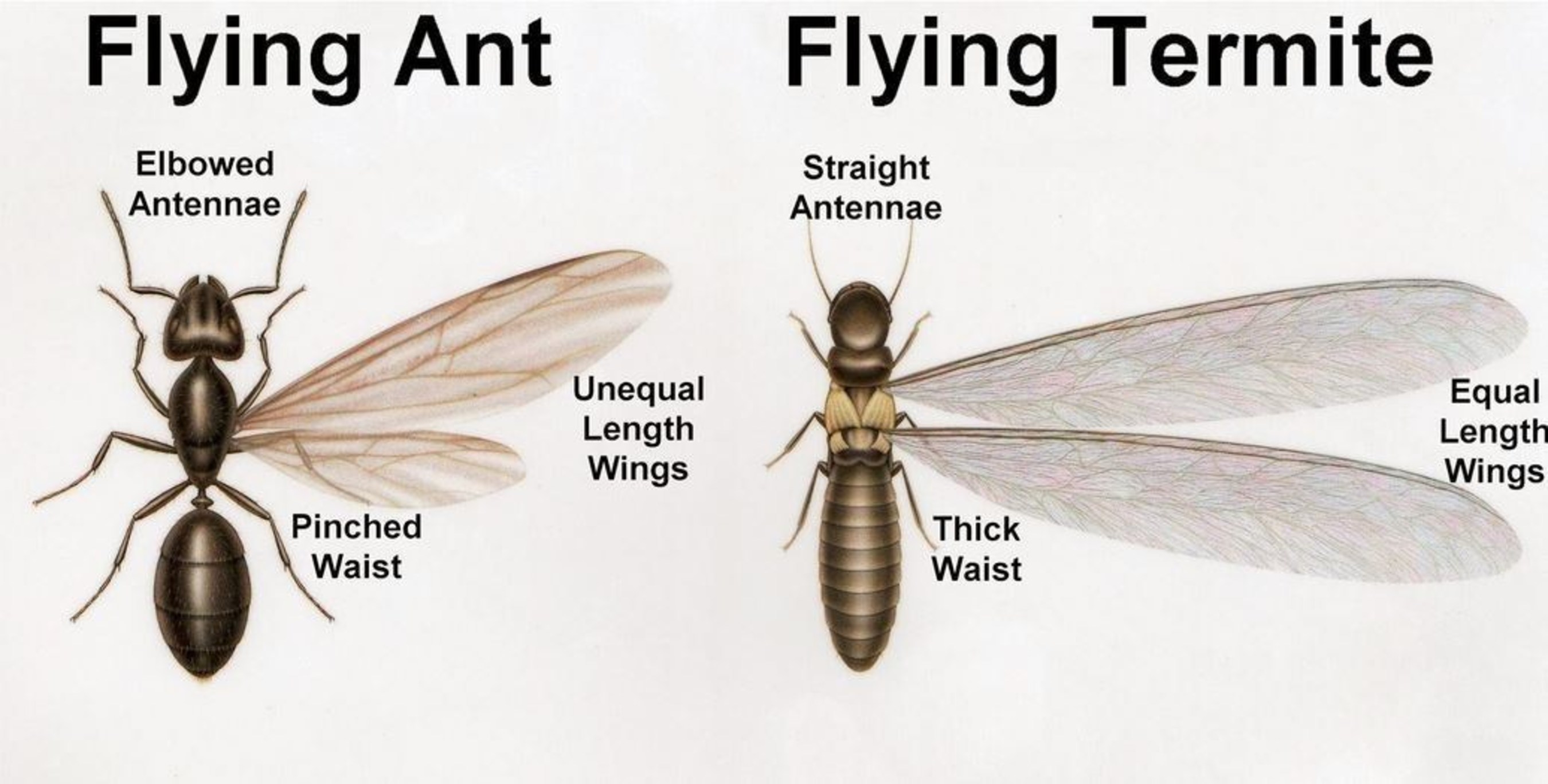
A carpenter ant s back hind wings are shorter than its front forewings and the wings do not look unusually long or disproportionate to its body.

What's the difference between a flying ant and a termite. Flying ants have a distinct waist with an arrow like body profile whereas termites have a straight or cylindrical body without a distinct waist. The two differ so let s help you decipher difference between flying ants and termites. Termites have two pairs of wings that are equal in length while ants have one pair of wings that is long and another pair that is shorter.
Termites fly or swarm in the spring when it s warm and rainy while ants fly during the summer. A termite has wings that are of equal size and shape and its wings are much longer than its body. Also the body structures differ between the two with ants having a distinct waist but not the termites.
Wings have well defined veins. Termites have a head and thorax that appear as one piece. Flying ants are hymenopterans while termites are isopterans.
Have you considered flying ants. Additionally ants have comparatively harder and darker bodies than termites. The head thorax and abdomen.
Winged ants have noticeably larger wings in the front than the pair in the back. Two sets of wings the rear wings are smaller then the front wings. Once they have mated both species shed their wings adding more confusion as to which creature you are observing.
Termites antennae are almost straight where the ant s antennae is elbowed. House pests such as termites or ants are no fun. But not all swarming insects are termites however.
When ant and termite swarmers mate they lose their wings. Two pairs of wings both the same size and shape. Termites have equally long pair of wings while the forewings are longer than hind wings in termites.
Termites are one of the most infamous with an infestation easy to spot by a swarm of flying insects. Another thing with termites is that their wings are not as durable as ants. Ants are more diverse than the termites.
Both winged termites and flying ants swarm when they are mating and they typically mate around the same time of year. The joints where they meet look like a neck and a waist. Termites are insects that are strongly attracted to wood especially rotting wood as a food source.
While both species have four wings termite wings are uniform in size. Here are some ways do identify the differences between flying ants vs termites. An ant s body has three individuated segments.
Wing have fine narrow veins that have a lace like appearance. Termites have thick straight waists while ants have a pinched waist with three distinct body segments. A termite s two segments the head and the thorax look more like one piece.
Termites also have a straight waistless body and two sets of wings that are equal in length rounded on the ends and twice the size of its body. Termites have straight antennae while ants have elbowed antennae.
A typical house mouse is small and black or gray with large ears tiny black eyes and a 3 to 4 inch long hairless tail. A young rat also has distinctly larger feet and head compared to the body than a mouse.
 Rats Vs Mice What Re The Differences Pest Strategies
Rats are very careful and will choose to avoid new things in their path until they have had time to get used to them being there.
:max_bytes(150000):strip_icc()/SPR_2656563-the-difference-between-rats-and-mice-5b4672f246e0fb00377ea032.png)
What's the difference between a rat and a mouse. One of the most important differences in behavior between mice and rats is that mice are curious and rats are cautious. Rats tend to enjoy being with other rats and are less territorial and less aggressive in social situations. The rat s body length is longer around 9 to 11 inches long whereas a mouse s body is just 3 or 4 inches long.
Rats are medium sized to large rodents. What s the difference between mouse and rat. Both are rodents but they have some genetic differences mdash.
Head a mouse has a small head that is proportional in size to its body while a young rat has a large head for its body. Rats are also over ten times heavier with an adult male weighing between a half and one pound while mice weigh in around a measly half ounce. Mice are usually light grey or brown in colour with a lighter shade on their bellies.
Mice are usually light grey or brown in colour with a lighter shade on their bellies. A rat s most notable feature is its long 6 to 9 inch scaly fur less tail. Rats have 21 pairs of chromosomes and mice have 20 chromosomal pairs.
A mature mouse can be distinguished from a young rat by its larger ears and longer tail compared to its body length than the rat. A young rat also has distinctly larger feet and head compared to the body than a mouse. Their coats are white gray brown or black in color and are often soiled enough to leave grease marks on touched surfaces.
A mature mouse can be distinguished from a young rat by its larger ears and longer tail compared to its body length than the rat. However rats may grow to be as long as 40 cm or more and weigh considerably more than mice. Rats and mice are quite different in social cognition which can be important in research for disorders including schizophrenia attention deficit disorder add autism spectrum disorder asd and mood disorders.
The snout of the rat is more blunt than that of the mouse. Mice have smaller heads and larger ears and eyes relative to the head compared with rats. A mouse has a more pointed muzzle while a rat s nose is more blunt.
When it comes to ears mice have large floppy ears however rats have larger ears in size compared to mice but not in respect to their body size. Adult rats tend to range in length from 11 to 19 inches with an average weight of pound to a pound. Starting with the snouts of both mice and rats mice will have more of a triangular nose whereas a rat s nose is blunter.
Homeowners can use feces to tell the difference between a squirrel and a rat infestation. Squirrel droppings usually have softer more circular sides.
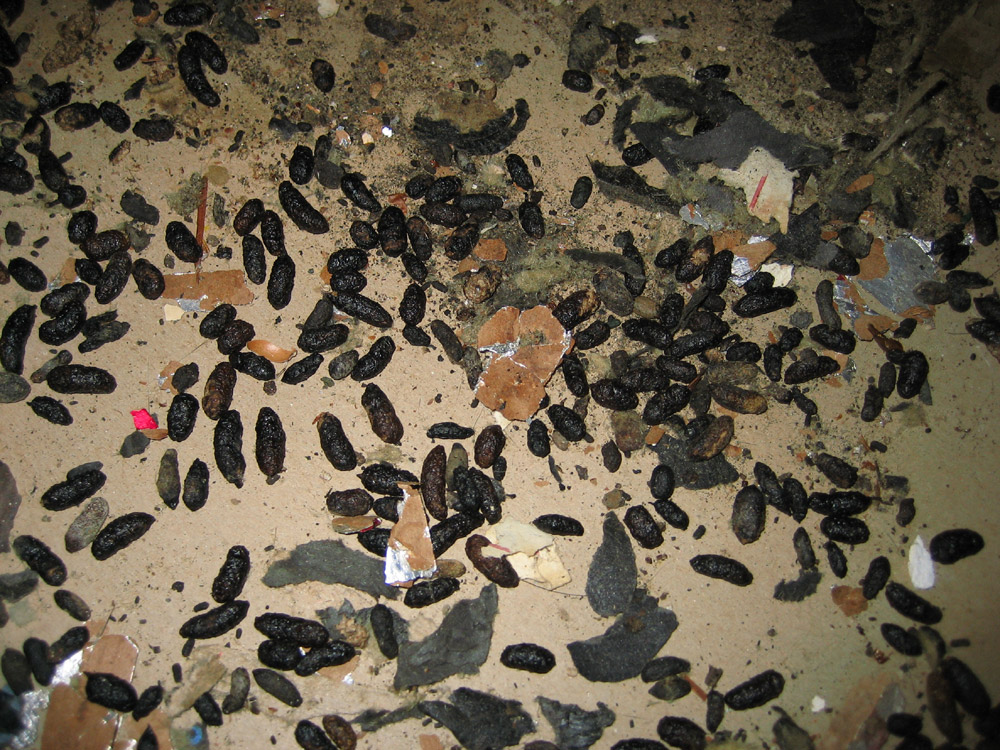
The shape of feces is another way of distinguishing between squirrel and rat droppings.

Difference between rat and squirrel droppings. Squirrels tend to leave their feces in clusters or piles. People often find squirrel scat in attics or around tree trunks. Rats tend to defecate everywhere they run like a mouse does.
Discover follow get 10 off can you please tell me what type of animal the poop is from canada deter prevent wildlife from entering your home how to tell the difference between squirrel and rat droppings march 2013 wildlife news oakville ontario canada pest control wild animal removal services ontario. On the other hand rat feces are oblong in shape. While both types of droppings can be dark brown to black in color with blunted ends they are found in different places around the home.
Another key to distinguishing the two kinds of droppings is squirrel poop tends to lighten in color with time whereas a rat s poop will stay dark in color. What pattern did you find the droppings in. Squirrel feces nearly always look even level on the surface.
Rat droppings often are pointy on the sides and much thicker in the middle. In addition a squirrel expels feces that are more barrel shaped. Rat droppings often appear along baseboards in cupboards and behind refrigerators or washing machines.
One useful clue in telling rat and squirrel feces apart involves the edges of the stools. A squirrel s feces usually are larger than those of a rat.